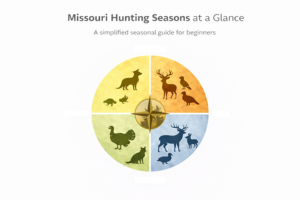
Understanding Hunting Seasons in the United States
If you didn’t grow up hunting, one of the first confusing things you discover is this:
There isn’t one “hunting season.”
There are seasons for different animals, different weapon types, and different regions of the country. Each state manages wildlife populations using its own regulatory framework, which means hunting opportunities vary widely depending on where you live.
This guide explains the big-picture structure of hunting seasons across the United States, and then uses Missouri as a real-world example of how those seasons actually play out during the year.
Why Hunting Seasons Exist
Hunting seasons are designed around wildlife conservation and population management. State wildlife agencies use scientific monitoring to determine when animals can be harvested without harming long-term population health.
Seasons are typically structured around:
- Breeding cycles
- Migration patterns
- Population density
- Habitat conditions
- Public safety
For migratory birds like ducks and geese, federal frameworks help establish allowable season lengths and harvest limits, while individual states implement specific dates and rules.
Sources: U.S. Fish & Wildlife Service
The Seasonal Pattern Across the United States
While exact dates vary by state, most hunting opportunities follow a broad seasonal rhythm.
Spring
Spring hunting seasons are usually limited but highly focused. The most common spring hunt across the U.S. is wild turkey.
Typical conditions:
- Cool mornings and warming afternoons
- Wet ground and spring vegetation
- High bird activity during breeding season
Spring seasons are often attractive for beginners because they focus on one primary species and require relatively simple gear.
Summer
Summer is often quieter for hunting in many states, and it is not empty. Several species may still be legally hunted depending on local regulations.
Examples of summer hunting opportunities in various states include:
- Predator hunting, such as coyote
- Small game like squirrels
- Varmints such as prairie dogs or ground squirrels in western states
- Frogging seasons in some regions
Summer hunting often emphasizes pest control or small game rather than large animals.
Fall
Fall is the busiest hunting season in most of the United States.
This is when many species become available:
- Whitetail deer
- Mule deer
- Elk
- Dove
- Upland birds
- Waterfowl (early seasons)
Many states stagger seasons by weapon type. Archery seasons often begin first, followed by muzzleloader or rifle seasons.
Fall hunting typically coincides with cooler temperatures and seasonal animal movement patterns.
Winter
Winter hunting opportunities often include:
- Waterfowl hunting during migration
- Predator hunting
- Late-season deer opportunities
- Small game hunting
Winter hunting requires more attention to weather conditions and safety planning due to cold exposure and shorter daylight hours.
How Seasons Work in Practice: Missouri Example
Missouri provides a useful example of how these seasonal patterns translate into real hunting opportunities.
Spring in Missouri
Missouri’s most prominent spring season is wild turkey. Spring turkey hunting typically occurs in April and May.
Source: Missouri Department of Conservation – Turkey Hunting
Summer in Missouri
While summer has fewer large-game opportunities, several hunting activities are still available.
Examples include:
- Coyote hunting
- Squirrel hunting beginning in late May
- Bullfrog and green frog seasons beginning in summer
Sources:
Missouri Department of Conservation – Squirrel
Missouri Department of Conservation – Coyote
Fall in Missouri
Fall is the most active hunting period in Missouri.
Common fall seasons include:
- Whitetail deer
- Dove
- Fall turkey
- Early waterfowl
Fall deer hunting often includes multiple season segments such as archery, firearms, and antlerless portions.
Winter in Missouri
Winter hunting in Missouri often includes:
- Waterfowl seasons
- Late archery deer seasons
- Coyote hunting
- Small game
Source: Missouri Department of Conservation – Hunting Seasons
The Key Lesson for Beginners
The most important takeaway is that hunting opportunities exist across the entire year, but they are distributed differently depending on the species and region.
If you are learning to hunt from scratch, focus on answering three questions:
- What species do I want to learn first?
- What season applies to that species in my state?
- What conditions will that season create in the field?
Once you understand those three things, the entire hunting calendar becomes much easier to navigate.
