• Blog
  • Account
  • Checkout
I Am Camping
  • Camping & Hiking
  • Grills & Outdoor Cooking
  • Outdoor Recreation & Play
  • Electronics & Power
  • Hunting, Fishing & Tactical Gear
  • RVs and Trailers - Fun & Comfort
  • Outdoor Gathering & Entertaining
  • Special Offers & Bundles
  • Camping & Hiking
  • Grills & Outdoor Cooking
  • Outdoor Recreation & Play
  • Electronics & Power
  • Hunting, Fishing & Tactical Gear
  • RVs and Trailers - Fun & Comfort
  • Outdoor Gathering & Entertaining
  • Special Offers & Bundles

Shop By Category:

  • Camping & Hiking
  • Grills & Outdoor Cooking
  • Outdoor Recreation & Play
  • Electronics & Power
  • Hunting, Fishing & Tactical Gear
  • RVs and Trailers - Fun & Comfort
  • Outdoor Gathering & Entertaining
  • Special Offers & Bundles

Shop By Brand:

  • Coffee Life
  • iamcamping
  • HyperGear
  • ALL4U
  • votagoo
  • PlumChef
  • Outsunny
  • Gofort
  • Flashfish
  • Safety Technology
  • HAWOK
  • VEVOR
  • Mace
  • Griz Guard – Outdoor Survival Gear & Bear Defense Products
  • VEVOR Outdoor & Camping Gear – Durable Tents, Coolers, Tools & Accessories
  • kamperbox
  • ReadyWise
  • KORAMAN
Home > Blog > Spring Camping Prep: What Usually Fails First?

Spring Camping Prep: What Usually Fails First?

Spring Camping Prep: What Usually Fails First?
March 8th, 2026

Spring Camping Prep: What Usually Fails First?

Spring camping looks easy on the calendar. And it can feel messy in the field.

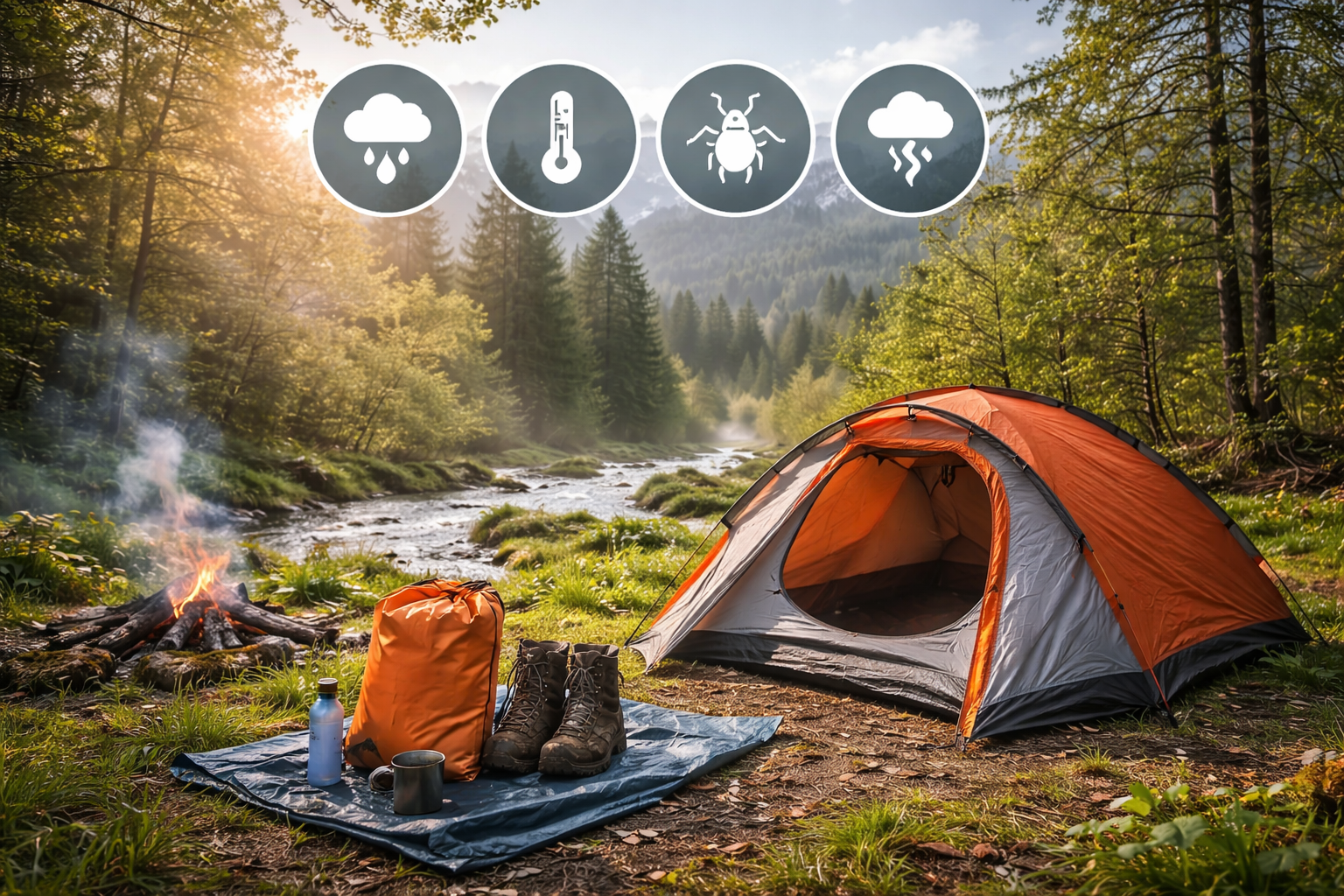
Days warm up fast. Nights can still bite. Trails stay wet. Water runs high. Bugs wake up early.

This guide is a needs analysis. It’s not a shopping list. Use it to start a real discussion.

  • Goal: fewer surprises, and a calmer camp routine.
  • Best use: first spring trip, shoulder-season weekends, and “quick camp” nights.

What we’ll cover

  1. Spring needs analysis (6 questions)
  2. Moisture control (dry zone vs wet zone)
  3. Cold nights (even when days feel warm)
  4. Mud season and Leave No Trace
  5. Bugs, ticks, and “early season” surprises
  6. Snowmelt and cold water
  7. Wind and spring storms
  8. A simple spring shakedown checklist
  9. Optional gear callouts (only if they solve a need)
  10. Discussion prompts
  11. Sources

Spring needs analysis (6 questions)

If you want spring to feel easier, answer these before you pack:

  1. How wet will this trip be? (rain, wet ground, dew, mud)
  2. How cold will it feel after dark? (wind + wet + shade)
  3. How much bug and tick pressure should you expect?
  4. How much runoff or cold water is in play? (streams, crossings, snowmelt)
  5. How exposed are you to wind and thunderstorms?
  6. How easy is your exit if the day goes sideways? (bailout plan)

Now you can prep on purpose. Not out of fear. Out of clarity.

1) Moisture control comes first

A lot of spring problems start with one issue: your “must stay dry” gear gets mixed with everything else.

Try this: the Dry-Zone Method

  • Dry zone: sleep clothes, socks, insulation, and electronics.
  • Wet zone: wet shell layers, muddy stakes, and damp shelter parts.
  • Rule: keep the dry zone sealed the whole time.

This works even when it rains during pack-up. Your shelter can be wet. Your sleep kit shouldn’t be.

Common spring mistakes

  • Putting wet rain gear on top of dry layers.
  • Letting “just a little damp” turn into a soaked sleep kit.
  • Waiting to put rain gear on until you are already wet.

2) Spring nights are still shoulder-season nights

A warm afternoon can trick you into packing light. Then 2AM shows up.

Simple fixes that help most campers

  • Pack one warmer layer than the afternoon makes you think you need.
  • Keep one set of dry camp clothes. Don’t hike in them.
  • Save dry socks for sleep. Dry feet help you sleep.
  • Vent early if you’re sweating. Sweat turns into cold later.

Note: sleep comfort depends on conditions, your pad, wind, and personal tolerance.

3) Mud season is part gear problem, part trail ethics problem

Spring trails get soft. That’s when they’re easiest to damage.

Leave No Trace guidance is simple: avoid widening trails. When it’s safe, go through mud, not around it.

Prep choices that match mud season

  • Expect slower miles. Don’t force the pace.
  • Plan shorter routes when the ground is saturated.
  • Camp on durable surfaces.
  • Respect closures and road limits.

Spring rewards patience.

4) Bugs and ticks can show up early

Some areas get tick activity earlier than people expect. Mosquitoes also wake up fast near water.

A simple bug plan

  • Use repellent as directed on the label.
  • Wear long clothing in brush and tall grass.
  • Do a tick check before bed and after the trip.
  • Keep “field clothes” away from your sleep kit.

Plant contact belongs in the same plan

  • Wear long sleeves and pants in unknown growth.
  • Wash exposed clothing after the trip.
  • Don’t burn brush you can’t identify.

5) Snowmelt changes water from “refreshing” to “decision-making”

Spring runoff is where a good-looking route turns into a bad call.

Stream crossing basics

  • Cross only where it is wide and shallow.
  • Avoid rapids, drops, and narrow channels.
  • Unbuckle pack straps before a crossing.
  • Use a stick for balance.
  • Turn around earlier. Cold water changes the risk fast.

Spring prep isn’t about being tougher. It’s about being smarter sooner.

6) Wind and spring storms matter more than most gear debates

Spring weather can swing fast. Your best tool is still your plan.

Simple storm habits

  • Check forecast, alerts, and road access the night before.
  • Check again the morning you leave.
  • Know where your safe shelter is if thunder starts.
  • Avoid camping under dead limbs or unstable trees.
  • Have a bailout plan before the weather turns.

Lightning note: there is no safe place outside during a thunderstorm.

A simple spring shakedown checklist

Before your first spring trip, lay your kit out and check these:

  • ✅ One true dry zone (sleep clothes, insulation, electronics)
  • ✅ One warm layer more than you think you need
  • ✅ Dry socks saved for sleep
  • ✅ Bug and tick plan
  • ✅ Mud and runoff plan (and a turnaround point)
  • ✅ Light for late setup or early pack-out
  • ✅ Exit plan if conditions change

Leave No Trace reminder: pack out all microtrash and camp on durable surfaces.

Land rules: check local BLM/USFS/park rules and stay limits (often 14 days).

Optional gear callouts (only if they solve a need)

This post is not here to sell you gear. And a few items do match common spring needs.

Dry zone storage

If wet pack-ups keep soaking your insulation, start by protecting the “must stay dry” stuff.

Dry Bag with Zipper (7.9 gal) – Orange (PVC)

Cold-night margin

If you keep waking up cold on spring nights, fix the sleep system first.

20°F Cold Weather Mummy Sleeping Bag (82" × 33")

Fast solo shelter for quick camps

If you want a simple setup when it’s cold and you’re tired, fast pitch helps.

1-Person Pop-Up Dome Tent (automatic setup)

Claims note: use product specs as listed on each page. Don’t assume ratings that aren’t shown.

Discussion prompts

If you’ve camped in spring before, you already know what breaks first.

Pick one and share what you do about it:

  • Wet gear during pack-up
  • Cold nights after warm days
  • Mud and messy trail conditions
  • Ticks and early-season bugs
  • Runoff and stream crossings
  • Wind and fast storm swings
  • Access issues (roads, closures, snow patches)

Question: What gets you first in spring where you camp?

If you want, share your region and your typical trip style (car camp, basecamp, backpack, or boondock).

Sources

These are good starting points for spring planning and safety reminders:

  • Leave No Trace: Spring guidance
  • CDC: Vector-borne disease prevention (ticks/mosquitoes)
  • CDC/NIOSH: Poisonous plant exposure prevention
  • NWS: Lightning safety
  • NPS (Yosemite): Wilderness safety and snowmelt runoff
  • NPS (Great Smoky Mountains): Hiking safety (weather, hypothermia)

One last reminder: spring prep is not about buying fear. It’s about buying fewer surprises.

Information

  • About Us
  • Contact Us
  • Shipping & Returns
  • Privacy Policy
  • Terms & Conditions

My Account

  • My Account
  • Order History
  • Track Orders
  • Address Book

Connect With Us

  • Twitter
  • Facebook
  • Pinterest
  • Instagram
  • Youtube

Secure Payments

© I Am Camping. All Rights Reserved.
I Am Camping Co. • 501 Boucher St., Dexter MO 63841 USA • (573) 872-1644 • support@iamcamping.com
Our website uses cookies to make your browsing experience better. By using our site you agree to our use of cookies. Learn More I Agree
× What Are Cookies As is common practice with almost all professional websites this site uses cookies, which are tiny files that are downloaded to your computer, to improve your experience. This page describes what information they gather, how we use it and why we sometimes need to store these cookies. We will also share how you can prevent these cookies from being stored however this may downgrade or 'break' certain elements of the sites functionality. For more general information on cookies see the Wikipedia article on HTTP Cookies. How We Use Cookies We use cookies for a variety of reasons detailed below. Unfortunately in most cases there are no industry standard options for disabling cookies without completely disabling the functionality and features they add to this site. It is recommended that you leave on all cookies if you are not sure whether you need them or not in case they are used to provide a service that you use. Disabling Cookies You can prevent the setting of cookies by adjusting the settings on your browser (see your browser Help for how to do this). Be aware that disabling cookies will affect the functionality of this and many other websites that you visit. Disabling cookies will usually result in also disabling certain functionality and features of the this site. Therefore it is recommended that you do not disable cookies. The Cookies We Set
Account related cookies If you create an account with us then we will use cookies for the management of the signup process and general administration. These cookies will usually be deleted when you log out however in some cases they may remain afterwards to remember your site preferences when logged out. Login related cookies We use cookies when you are logged in so that we can remember this fact. This prevents you from having to log in every single time you visit a new page. These cookies are typically removed or cleared when you log out to ensure that you can only access restricted features and areas when logged in. Form related cookies When you submit data to through a form such as those found on contact pages or comment forms cookies may be set to remember your user details for future correspondence. Site preference cookies In order to provide you with a great experience on this site we provide the functionality to set your preferences for how this site runs when you use it. In order to remember your preferences we need to set cookies so that this information can be called whenever you interact with a page is affected by your preferences.
Third Party Cookies In some special cases we also use cookies provided by trusted third parties. The following section details which third party cookies you might encounter through this site.
This site uses Google Analytics which is one of the most widespread and trusted analytics solution on the web for helping us to understand how you use the site and ways that we can improve your experience. These cookies may track things such as how long you spend on the site and the pages that you visit so we can continue to produce engaging content. For more information on Google Analytics cookies, see the official Google Analytics page. We also use social media buttons and/or plugins on this site that allow you to connect with social network in various ways. For these to work, the social networks may set cookies through our site which may be used to enhance your profile on their site, or contribute to other purposes outlined in their respective privacy policies.