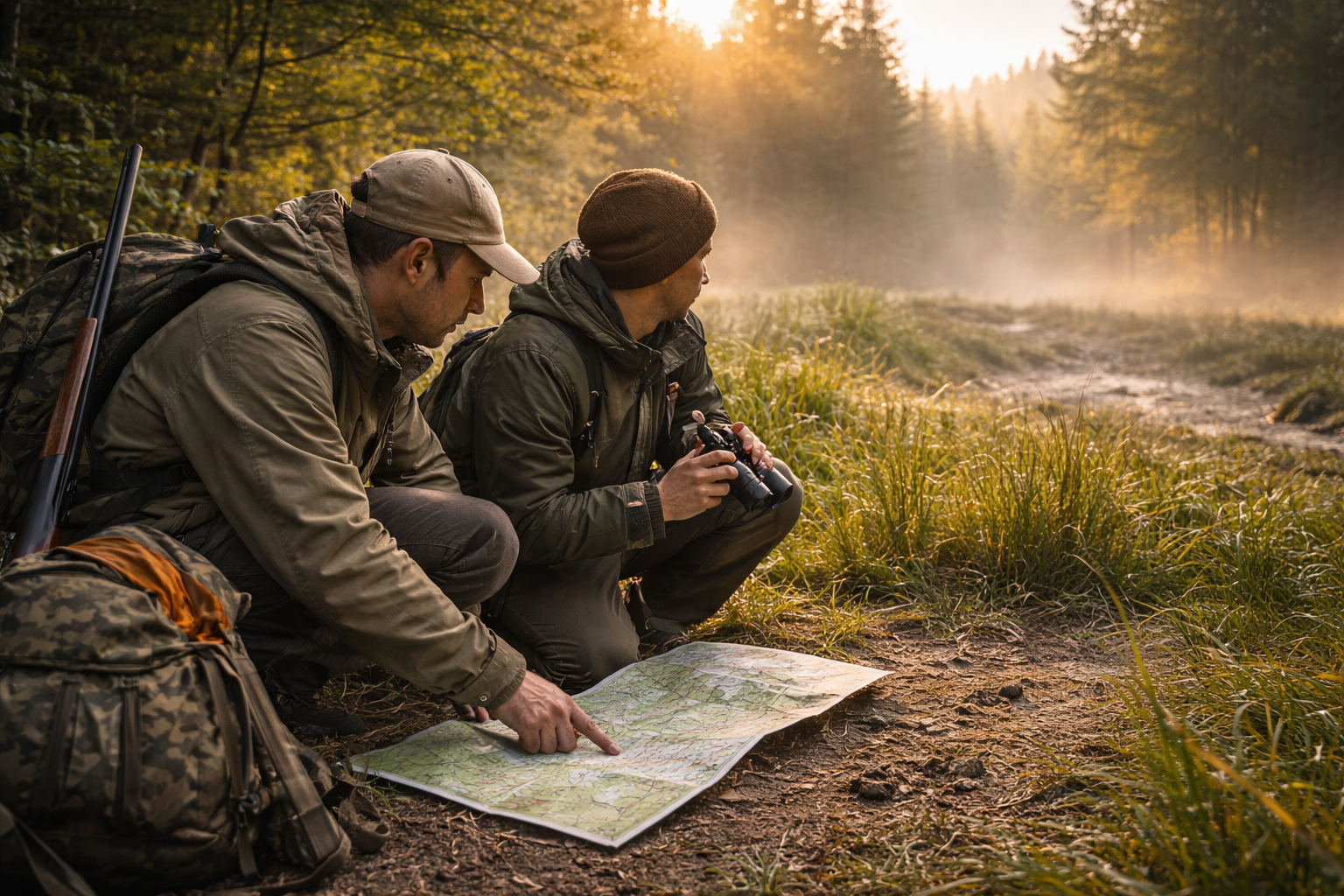
Learning to Hunt When You Didn’t Grow Up With It
Some people grow up hunting.
They follow parents or grandparents into the woods before they can even carry a rifle. They learn animal tracks the same way they learn to ride a bike.
But a lot of people didn’t grow up that way.
More Americans today are discovering hunting later in life—after growing up in cities, suburbs, or families that simply never hunted.
This guide is for those people.
If you’re curious about hunting but don’t know where to start, you’re not alone. This series walks through the entire process from the perspective of someone learning the skill from the outside.
First, understand this: hunting is a skill, not a personality
People often assume hunters are a specific type of person. In reality, hunting is just a collection of skills.
- Understanding animal behavior
- Learning land navigation
- Knowing seasons and regulations
- Practicing patience and observation
- Respecting wildlife and ecosystems
Like any skill set, it can be learned.
The biggest barriers for beginners
For people who didn’t grow up around hunting, the barriers usually look like this:
- No family mentor
- No understanding of seasons
- Confusion about licenses and tags
- Uncertainty about gear
- Fear of doing something wrong
The good news is that every one of those obstacles has a clear path forward.
Step 1: Learn your local hunting seasons
Every state in the U.S. runs its own wildlife management system.
Seasons vary widely depending on the region and species.
Common hunting seasons across the U.S.
- Spring: Turkey hunting dominates many states
- Early fall: Archery deer seasons begin
- Mid fall: Elk, mule deer, and rifle seasons open in western states
- Late fall: Whitetail rut hunting peaks
- Winter: Waterfowl, small game, and predator hunting
Your state wildlife agency website is the best place to start.
Step 2: Take a hunter education course
Nearly every state requires hunter education before purchasing a license.
Hunter education teaches:
- Firearm safety
- Wildlife conservation
- Ethical harvest practices
- Basic survival skills
Many courses are now offered online with a short in-person field day.
Step 3: Understand public land
One misconception about hunting is that you need private land.
You don’t.
The United States has millions of acres of public hunting land managed by:
- U.S. Forest Service
- Bureau of Land Management (BLM)
- State wildlife agencies
- National forests and grasslands
Learning to hunt public land is one of the most valuable skills a new hunter can develop.
Step 4: Expect the learning curve
Movies make hunting look simple.
In reality, first hunts often involve:
- Long hikes
- Cold mornings
- Seeing nothing
- Learning animal patterns
- Making mistakes
That’s normal.
Hunting is more like learning to fish than flipping a switch.
Step 5: Focus on learning, not success
Your first season should focus on observation.
- Where animals move
- What time they appear
- How weather changes behavior
- How terrain influences travel routes
Many experienced hunters say the real reward is the process itself.
This series will cover the full path
In the next articles we’ll cover:
- Understanding hunting seasons across different regions
- Licenses, tags, and legal requirements
- Basic beginner gear
- Public land scouting
- Your first hunt
- Field dressing and processing game
Hunting can feel intimidating at first.
But like camping, fishing, or backpacking, it’s something people learn step by step.
The important part is starting.
