• Blog
  • Account
  • Checkout
I Am Camping
  • Camping & Hiking
  • Grills & Outdoor Cooking
  • Outdoor Recreation & Play
  • Electronics & Power
  • Hunting, Fishing & Tactical Gear
  • RVs and Trailers - Fun & Comfort
  • Outdoor Gathering & Entertaining
  • Special Offers & Bundles
  • Camping & Hiking
  • Grills & Outdoor Cooking
  • Outdoor Recreation & Play
  • Electronics & Power
  • Hunting, Fishing & Tactical Gear
  • RVs and Trailers - Fun & Comfort
  • Outdoor Gathering & Entertaining
  • Special Offers & Bundles

Shop By Category:

  • Camping & Hiking
  • Grills & Outdoor Cooking
  • Outdoor Recreation & Play
  • Electronics & Power
  • Hunting, Fishing & Tactical Gear
  • RVs and Trailers - Fun & Comfort
  • Outdoor Gathering & Entertaining
  • Special Offers & Bundles

Shop By Brand:

  • Coffee Life
  • iamcamping
  • HyperGear
  • ALL4U
  • votagoo
  • PlumChef
  • Outsunny
  • Gofort
  • Flashfish
  • Safety Technology
  • HAWOK
  • VEVOR
  • Mace
  • Griz Guard – Outdoor Survival Gear & Bear Defense Products
  • VEVOR Outdoor & Camping Gear – Durable Tents, Coolers, Tools & Accessories
  • kamperbox
  • ReadyWise
  • KORAMAN
Home > Blog > Why Hunting and Conservation Are Connected | Beginner Hunting Guide

Why Hunting and Conservation Are Connected | Beginner Hunting Guide

Why Hunting and Conservation Are Connected | Beginner Hunting Guide
iamcamping
March 25th, 2026

Why Hunting and Conservation Are Connected

For people who didn’t grow up hunting, one question often comes up sooner or later:

How can hunting and conservation exist at the same time?

The answer is rooted in the history of wildlife management in North America.

Modern hunting in the United States operates within a conservation system designed to protect wildlife populations, restore habitat, and ensure that hunting remains sustainable for future generations.

This system is often referred to as the North American Model of Wildlife Conservation.

The North American Model of Wildlife Conservation

The North American Model of Wildlife Conservation developed during the late 19th and early 20th centuries as wildlife populations declined due to overharvest and habitat loss.

Conservation leaders and policymakers created a system that would manage wildlife as a public resource rather than private property.

The model rests on several key principles:

  • wildlife belongs to the public
  • wildlife is managed through science
  • hunting is regulated through laws and seasons
  • access to wildlife is democratic
  • wildlife should not be wasted

This approach transformed wildlife management and helped restore many species that had been severely depleted.

Source: The Wildlife Society – North American Model of Wildlife Conservation

How Hunters Fund Conservation

One of the most important parts of the conservation system is how it is funded.

In the United States, hunting licenses and taxes on hunting equipment help pay for wildlife management and habitat restoration.

A major piece of legislation supporting this system is the Pittman–Robertson Act of 1937.

This law created a federal excise tax on firearms, ammunition, and archery equipment, with the revenue directed toward wildlife conservation programs.

These funds support:

  • habitat restoration
  • wildlife research
  • hunter education programs
  • public land conservation

Since its creation, the program has generated billions of dollars for conservation projects across the country.

Source: U.S. Fish & Wildlife Service – Pittman–Robertson Act

Wildlife Recovery Success Stories

Many wildlife species in North America have recovered significantly due to conservation efforts supported by regulated hunting.

Examples include:

  • whitetail deer
  • wild turkey
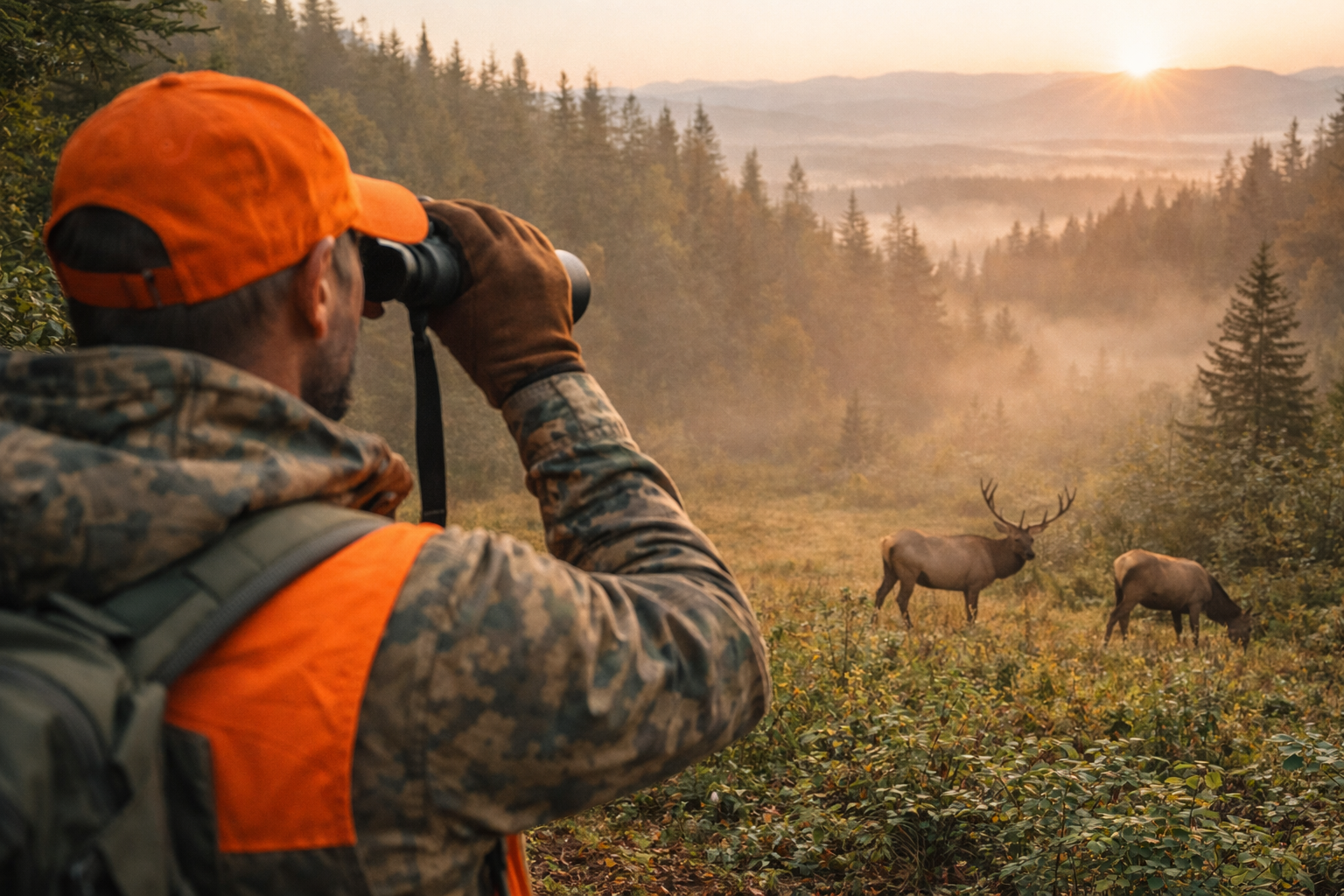
  • elk
  • wood duck
  • pronghorn antelope

These species were once heavily reduced or locally extinct in some regions.

Today they exist in healthy populations largely because of coordinated wildlife management programs.

The Role of State Wildlife Agencies

Wildlife management in the United States is primarily handled by state agencies.

These agencies are responsible for:

  • setting hunting seasons
  • establishing harvest limits
  • conducting wildlife population surveys
  • managing habitat on public lands
  • enforcing wildlife laws

Because wildlife conditions vary widely across the country, each state sets its own regulations based on local ecosystems.

Source: U.S. Fish & Wildlife Service – State Wildlife Programs

Ethics and Responsibility

Conservation is not only about laws and funding. It also depends on ethical behavior by hunters.

Ethical hunting traditions emphasize:

  • following regulations
  • taking responsible shots
  • using harvested animals respectfully
  • protecting habitat
  • respecting other outdoor users

Responsible hunters understand that wildlife is a shared public resource.

Why This Matters for New Hunters

For people learning to hunt later in life, understanding conservation helps put the activity in context.

Hunting is not simply recreation.

Within the North American system, it is also part of the broader framework that supports wildlife management and habitat protection.

This connection between hunting and conservation is one reason wildlife populations across much of North America remain stable or have recovered dramatically over the past century.

Looking Back at the Journey

This series began with a simple idea: learning to hunt when you didn’t grow up around it.

Along the way we covered:

  • how hunting seasons work
  • licenses and permits
  • basic gear
  • scouting public land
  • what happens on your first hunt
  • processing game
  • and how conservation fits into the system

Each of these steps helps build the knowledge needed to approach hunting responsibly.

Hunting is a skill that people continue learning throughout their lives.

Like any outdoor pursuit, it rewards patience, curiosity, and respect for the land.

For many people who start later in life, the journey begins with simple questions — and grows into a deeper understanding of wildlife, landscapes, and conservation.

Information

  • About Us
  • Contact Us
  • Shipping & Returns
  • Privacy Policy
  • Terms & Conditions

My Account

  • My Account
  • Order History
  • Track Orders
  • Address Book

Connect With Us

  • Twitter
  • Facebook
  • Pinterest
  • Instagram
  • Youtube

Secure Payments

© I Am Camping. All Rights Reserved.
I Am Camping Co. • 501 Boucher St., Dexter MO 63841 USA • (573) 872-1644 • support@iamcamping.com
Our website uses cookies to make your browsing experience better. By using our site you agree to our use of cookies. Learn More I Agree
× What Are Cookies As is common practice with almost all professional websites this site uses cookies, which are tiny files that are downloaded to your computer, to improve your experience. This page describes what information they gather, how we use it and why we sometimes need to store these cookies. We will also share how you can prevent these cookies from being stored however this may downgrade or 'break' certain elements of the sites functionality. For more general information on cookies see the Wikipedia article on HTTP Cookies. How We Use Cookies We use cookies for a variety of reasons detailed below. Unfortunately in most cases there are no industry standard options for disabling cookies without completely disabling the functionality and features they add to this site. It is recommended that you leave on all cookies if you are not sure whether you need them or not in case they are used to provide a service that you use. Disabling Cookies You can prevent the setting of cookies by adjusting the settings on your browser (see your browser Help for how to do this). Be aware that disabling cookies will affect the functionality of this and many other websites that you visit. Disabling cookies will usually result in also disabling certain functionality and features of the this site. Therefore it is recommended that you do not disable cookies. The Cookies We Set
Account related cookies If you create an account with us then we will use cookies for the management of the signup process and general administration. These cookies will usually be deleted when you log out however in some cases they may remain afterwards to remember your site preferences when logged out. Login related cookies We use cookies when you are logged in so that we can remember this fact. This prevents you from having to log in every single time you visit a new page. These cookies are typically removed or cleared when you log out to ensure that you can only access restricted features and areas when logged in. Form related cookies When you submit data to through a form such as those found on contact pages or comment forms cookies may be set to remember your user details for future correspondence. Site preference cookies In order to provide you with a great experience on this site we provide the functionality to set your preferences for how this site runs when you use it. In order to remember your preferences we need to set cookies so that this information can be called whenever you interact with a page is affected by your preferences.
Third Party Cookies In some special cases we also use cookies provided by trusted third parties. The following section details which third party cookies you might encounter through this site.
This site uses Google Analytics which is one of the most widespread and trusted analytics solution on the web for helping us to understand how you use the site and ways that we can improve your experience. These cookies may track things such as how long you spend on the site and the pages that you visit so we can continue to produce engaging content. For more information on Google Analytics cookies, see the official Google Analytics page. We also use social media buttons and/or plugins on this site that allow you to connect with social network in various ways. For these to work, the social networks may set cookies through our site which may be used to enhance your profile on their site, or contribute to other purposes outlined in their respective privacy policies.