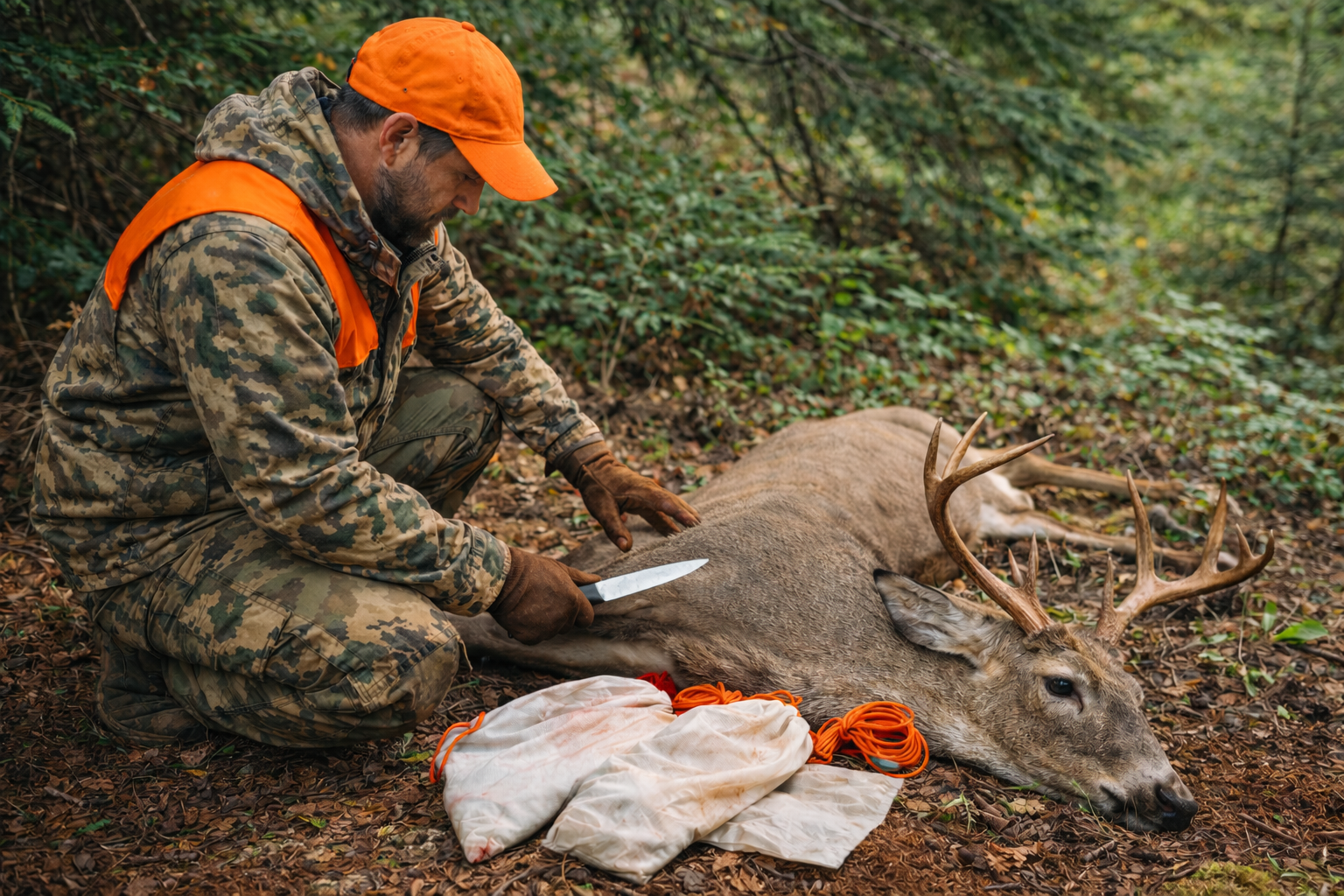
Field Dressing and Processing Game: What Happens After the Harvest
For many new hunters, the moment after a successful harvest raises an important question:
What happens next?
Field dressing and processing game are essential parts of hunting. These steps preserve the meat, ensure food safety, and show respect for the animal that was harvested.
While the details vary by species and environment, the overall process follows a clear sequence that beginners can learn step by step.
The Purpose of Field Dressing
Field dressing refers to removing the internal organs of an animal shortly after harvest.
This process allows the carcass to cool quickly and helps prevent spoilage of the meat.
Proper cooling is especially important in warm conditions. Removing internal organs allows heat to escape from the body cavity and slows bacterial growth.
Source: USDA Food Safety and Inspection Service – Wild Game Handling
Confirming the Harvest
Before beginning field dressing, hunters confirm that the animal has expired.
This step is important for safety and ethical harvesting.
Hunters typically approach carefully from behind and observe the animal before handling it.
Once the animal is confirmed expired, the hunter may attach the required tag or permit according to state regulations.
The Basic Field Dressing Process
While the exact technique varies by species, the general steps are similar for most large game animals.
- Position the animal on its back or side
- Make a careful incision along the abdomen
- Remove internal organs
- Prop open the body cavity to allow airflow
- Allow the carcass to cool
Hunters often carry a small field dressing kit that includes:
- sharp knife
- gloves
- game bags
- flagging or cord
These tools help keep the process efficient and sanitary.
Transporting Game From the Field
Once the animal has been field dressed, the next step is transporting it from the field.
The method depends on the species and terrain.
Common approaches include:
- Dragging the animal to a trail or vehicle
- Using a game cart
- Packing meat out in sections
In remote areas or steep terrain, hunters may quarter the animal and pack the meat out in game bags.
Processing the Meat
After returning from the field, the animal must be processed.
This can happen in several ways:
- processing the meat at home
- taking the animal to a licensed meat processor
- sharing processing tasks with experienced hunters
Processing typically involves:
- skinning the animal
- removing large muscle groups
- cutting steaks and roasts
- grinding meat for burger or sausage
Proper refrigeration and sanitation are important during this stage.
Using the Harvest Respectfully
Many hunters view harvesting game as part of a larger responsibility to respect wildlife and use the animal fully.
This often includes:
- proper meat handling
- sharing meat with family or community
- using hides, bones, or other parts when possible
Ethical hunting traditions emphasize that harvesting an animal should never be wasteful.
Learning the Process
Field dressing may seem intimidating the first time, but most hunters learn through observation and experience.
Many wildlife agencies offer instructional videos and workshops demonstrating proper techniques.
Practicing these skills helps hunters handle game efficiently and safely.
Source: Missouri Department of Conservation – Processing Deer
