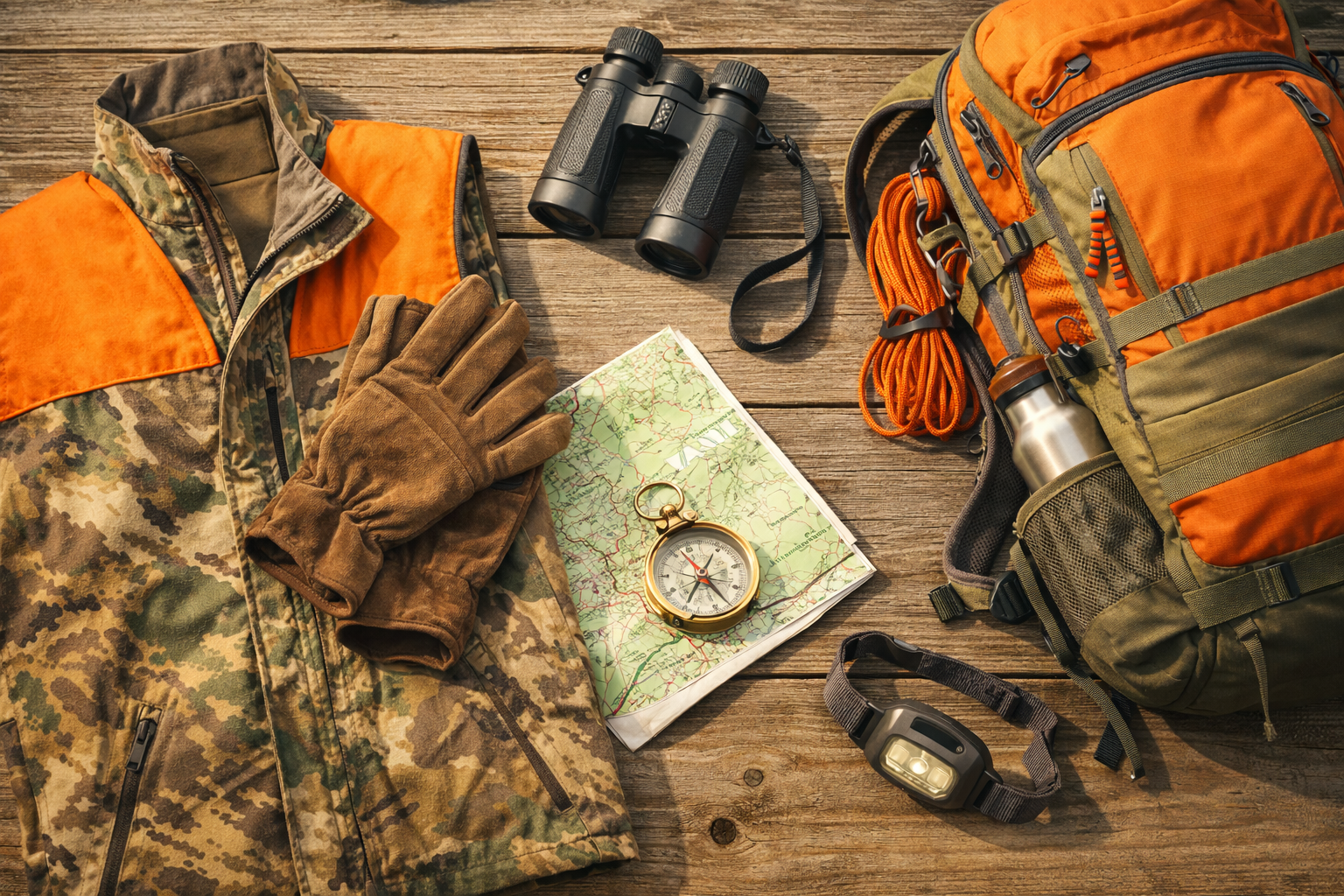
Basic Hunting Gear for Beginners: What You Actually Need
One of the fastest ways new hunters get overwhelmed is gear.
If you search for hunting equipment online, it can feel like you need hundreds of specialized items before stepping into the woods.
The reality is much simpler.
Most experienced hunters will tell you the same thing: your first hunt doesn’t require a giant gear closet. It requires a small set of reliable tools and the knowledge to use them safely.
This guide walks through the core equipment beginners actually need and explains what each piece does in the field.
Start With the Basics
The goal of beginner gear is simple: stay safe, stay comfortable, and stay oriented in the field.
Most first-time hunters can focus on five main categories:
- Clothing and layering
- Navigation and safety tools
- Optics and observation
- Basic carry gear
- Lighting
Everything else can come later.
Clothing: Stay Comfortable First
New hunters often assume camouflage is the most important clothing choice. In reality, comfort and weather protection matter much more.
Most beginners should start with:
- Weather-appropriate outerwear
- Layered clothing for changing temperatures
- Durable boots with good traction
- Gloves and hat for cold conditions
In firearm seasons, many states also require hunters to wear blaze orange for safety.
Source: U.S. Fish & Wildlife Service
Navigation Tools
Even experienced hunters rely on navigation tools to stay oriented.
At minimum, beginners should carry:
- A physical map of the area
- A compass or GPS-enabled phone
- Knowledge of entry and exit routes
Many hunters now use digital mapping tools, but a physical map is still a valuable backup.
Optics: Seeing Before Shooting
Observation is one of the most important hunting skills.
Binoculars allow hunters to scan terrain, identify animals at distance, and observe behavior without moving closer.
Most beginners benefit from carrying compact binoculars while scouting or hunting open terrain.
Carry Gear: A Simple Pack
A small daypack helps carry essentials safely and comfortably.
Typical pack contents might include:
- Water
- Extra layers
- Navigation tools
- Snacks
- Basic first aid supplies
Keeping your gear organized makes it easier to move quietly and avoid losing equipment in the field.
Lighting
Many hunts begin before sunrise or end after sunset.
A reliable headlamp or flashlight allows hunters to:
- Navigate safely in low light
- Track game
- Set up or pack gear
Lighting is one of the most overlooked pieces of beginner gear but quickly becomes essential once you spend time outdoors before daylight.
Optional Gear That Becomes Useful Later
Once hunters gain experience, they often add equipment like:
- Game processing tools
- Specialized optics
- Trail cameras
- Advanced navigation devices
But those are upgrades. They are not requirements for learning the basics.
The Real Skill Behind the Gear
Gear supports hunting skills, but it doesn’t replace them.
The most important things a beginner can learn are:
- Animal behavior
- Wind and scent awareness
- Terrain and habitat
- Patience and observation
Good gear makes the experience easier. Knowledge makes the hunt possible.
